Waterloo Culvert Company: Driveway Culvert Installation in Waterloo, IA
Waterloo Culvert Company is an excavating contractor licensed and insured in Iowa, building driveway entrances across Black Hawk County. We do driveway culvert installation, culvert replacement, culvert repair and cleaning, farm and field entrances, driveway approach and grading, creek and lane crossings, outlet and erosion protection, and commercial culverts. Our customers own acreages, farms, country homes, gravel-road entrances, and subdivision lots in Black Hawk, Bremer, Buchanan, and Tama counties.
We set ADS N-12 or Prinsco Goldflo dual wall pipe on a shaped granular bed, with non-woven geotextile between that bed and the native soil, backfill compacted in lifts on both sides at once, flared end sections bolted on each end, and angular rock at the outlet. The pipe goes in on the flow line the ditch already runs, with a steady fall from inlet to outlet. Compare that to a short pipe dropped in a trench and covered with loose dirt. That pipe bears on two high spots, loses the fill off both ends, and scours a hole under the outlet in a season.
Call for a Free Estimate- Licensed and insured in IA
- Pipe sized to the ditch, not to the driveway
- Granular bedding and even backfill on both sides
- Flared end sections and rock at the outlet
- Black Hawk, Bremer, Buchanan, and Tama counties
Driveway Culvert Installation
The question that decides this job is how much water your ditch carries in a hard rain. That comes from the acres draining to that point, how steeply they fall, and what covers them. Row crop, pasture, timber, roofs and pavement all shed differently. A short driveway on a big watershed needs more pipe than a long driveway on a small one.
We measure the ditch, size the pipe to it, and confirm the county minimum before we quote. Then the pipe goes on the flow line with a slight steady fall, bedded on shaped granular material so it bears along its whole length. More on driveway culvert installation.
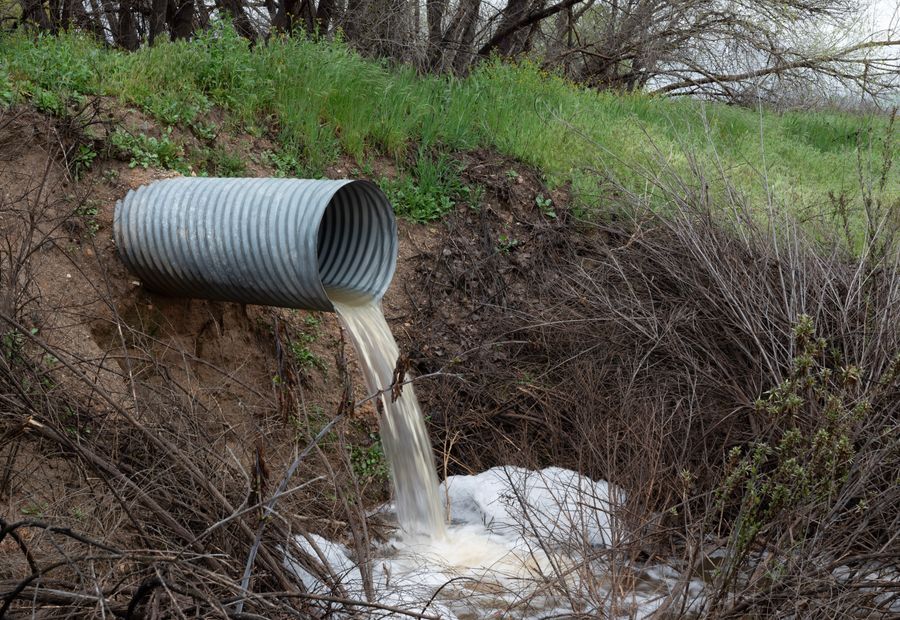
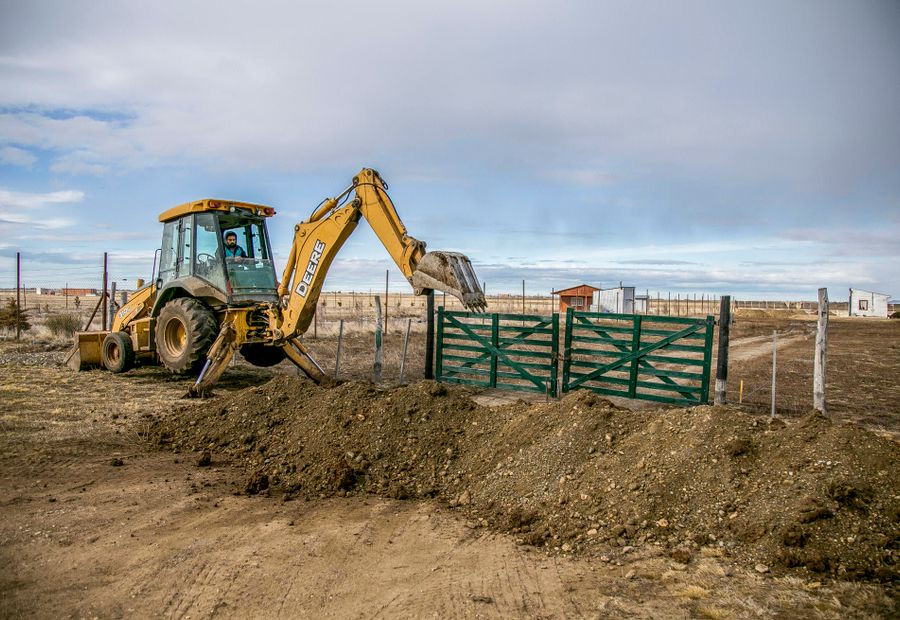
Culvert Replacement
Metal pipe rusts from the bottom up. Water and sediment sit in the invert, and that is where the steel goes first. So a pipe with a hole along its floor still looks sound when you stand at the end and look through it. Flattened pipe and joints that have pulled apart are the other two we replace.
Replacement is also the moment to fix a size that was wrong from the start. We dig the old pipe out, set the new invert to the ditch bottom, and get the entrance driveable again the same day on a normal residential job. More on culvert replacement.
Culvert Repair and Cleaning
Check the cheap fix first. Most pipes that stop working are simply full. Silt, gravel washed off the shoulder, a root mass, cattails, or a beaver dam at the inlet. An hour with a machine clears it and the ditch runs again. Nobody needs to sell you a new pipe for that.
Past cleaning, we rebuild washed out ends, reset end sections that blew off, patch a rusted invert, seal a separated joint, and fill the voids where soil has washed out alongside a pipe. We also tell you when a repair is money spent on a pipe that is done. More on culvert repair.
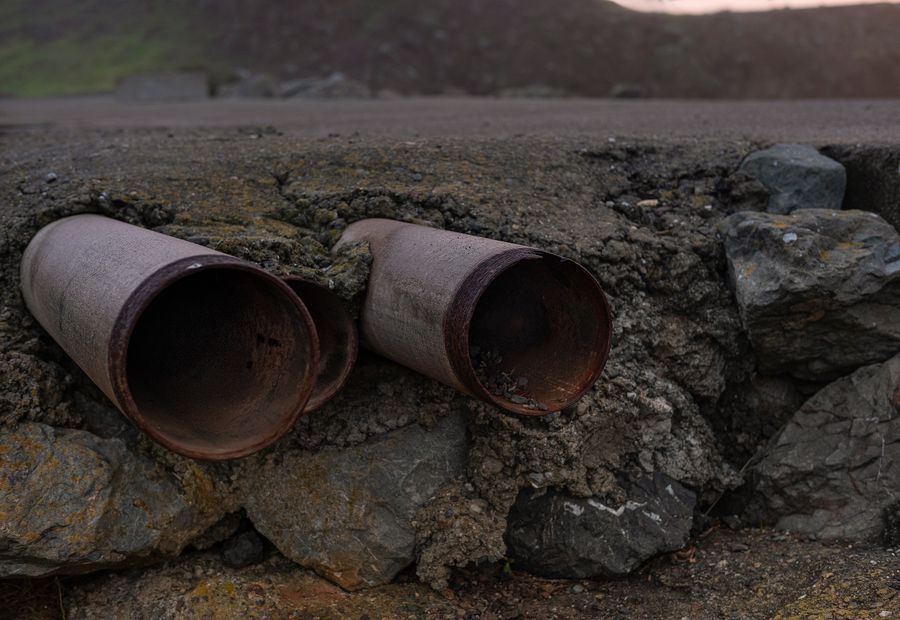
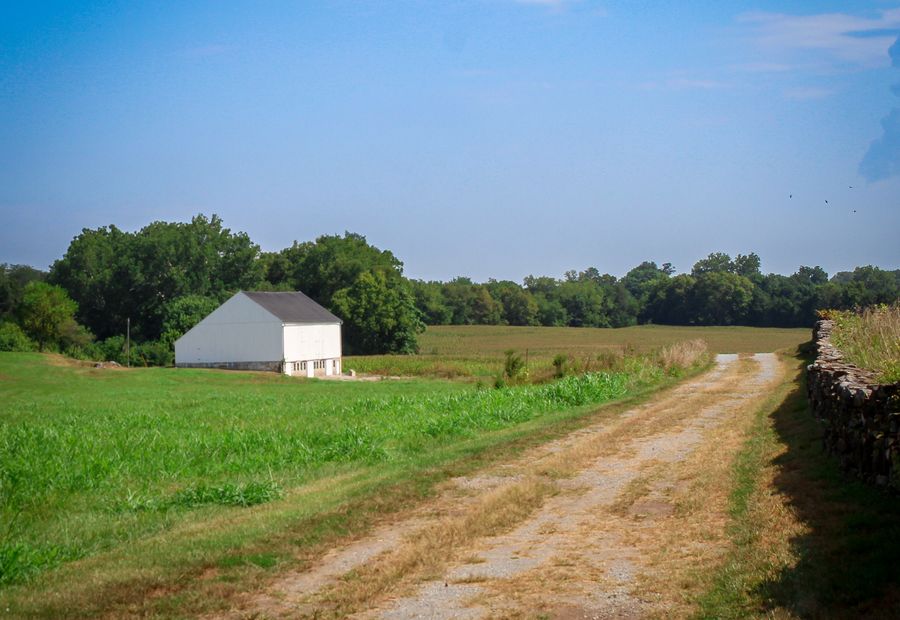
Farm and Field Entrances
A grain truck and a combine need a wider opening than a car does, and a wider entrance needs a longer pipe. Loaded axles need more cover over the top of that pipe than a residential drive does. Reinforced concrete pipe earns its price under an entrance a semi uses every fall.
We set gates back off the road so a rig can clear the pavement before it stops, and we work around your tile outlets rather than through them. Field work waits for the window between planting and harvest, and we schedule it that way. More on farm and field entrance culverts.
Driveway Approach and Grading
The approach is half the job and the owner only notices it afterward. Your driveway rises out of the ditch and joins the pavement, and that transition has to be stretched out enough that a low bumper clears it and a puddle has nowhere to sit. Behind the road it needs a crown or a cross fall so rain leaves the driveway sideways.
A driveway that runs water down its own length delivers that water straight to the culvert and washes the approach on the way. We rebuild the base, set the rock depth, and tie an asphalt or concrete apron into gravel where there is one. More on approach grading.
Creek and Crossing Culverts
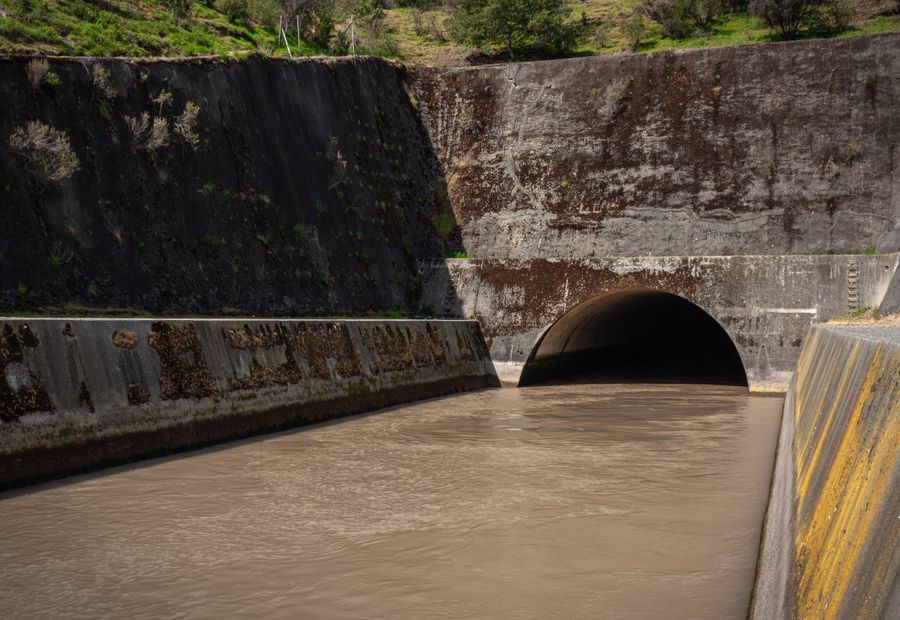
A lane crossing a creek or a draw is a different animal from a roadside entrance. You are sizing for a live stream, not for road runoff, and the water arrives with force. Sometimes that means one large pipe. Sometimes it means concrete box sections, because a box spans wide under shallow cover where round pipe will not fit.
Both banks need protection and both approaches need grade. A stream crossing also carries approvals a driveway entrance does not, and we find out which ones apply to your crossing before we price it. More on creek and lane crossings.
Outlet and Erosion Protection
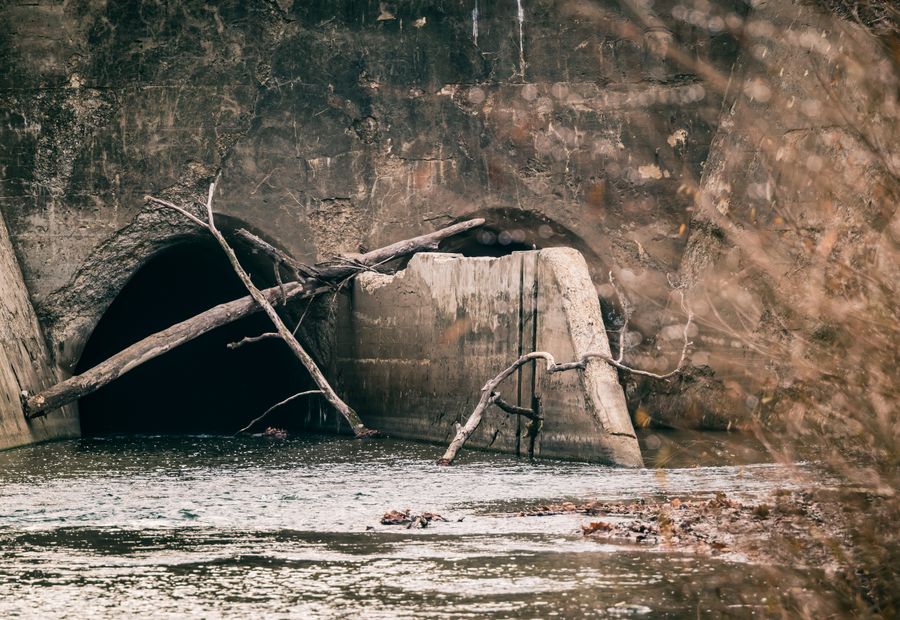
A pipe holds water in and speeds it up. An open ditch does neither, so the flow arrives at the outlet with more force than the ground there can take. Bare soil turns into a hole, the hole works backward under the pipe, and then the outlet end is hanging in the air with nothing under it.
Angular riprap sized to the flow and set on fabric spreads that water out and stops the scour before it starts. We also reshape the ditch above and below the pipe, seed the new slopes, and pin erosion control blanket where the fall is steep enough to move seed. More on outlet protection.
Commercial and Subdivision Culverts
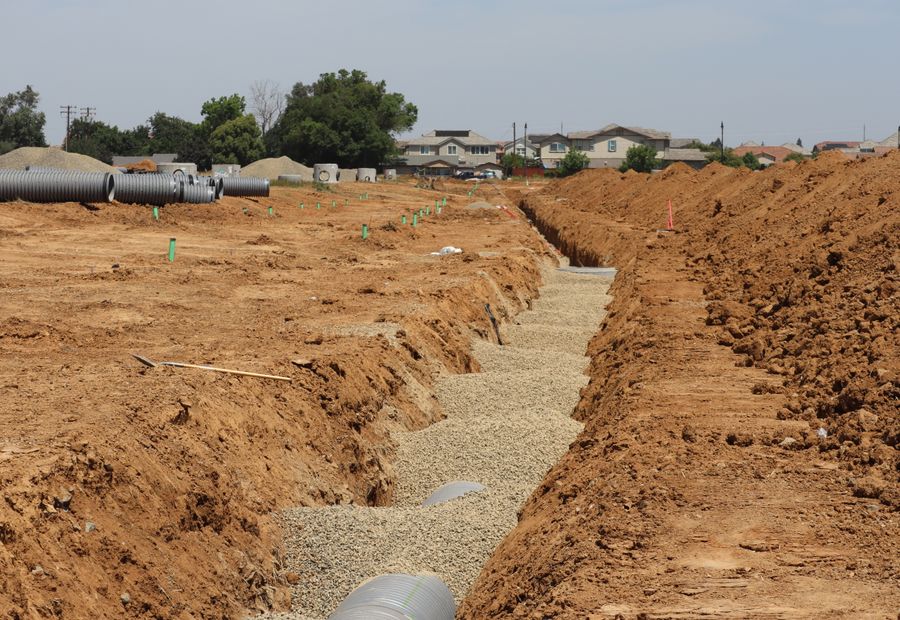
Commercial entrances and private road crossings get built to an engineer's plan, in reinforced concrete pipe or box sections, with cover and load figures somebody has already run. Our job is to build what the drawing says and to flag anything on the ground that does not match it.
An entrance a business depends on stays open during business hours. We phase multiple entrances so a lot never loses all of them at once, and the licensing, insurance, and schedule go to your project manager first. More on commercial culverts.
Why Black Hawk County Landowners Call Us
- We size the pipe to the ditch. Not to the width of your driveway and not to the price of the pipe. Acres draining to that point, how steeply they fall, and what grows on them decide it. Start with driveway culvert installation.
- We check whether cleaning solves it before quoting a replacement. Silt at the inlet costs a fraction of a new entrance, and half the calls we get are that. See culvert repair and cleaning.
- Both ends get a treatment. Cut a pipe off flush and nothing holds the fill at the opening. Water eats that fill, the shoulder slumps, and the edge of the driveway drops behind it. Flared end sections are the standard answer and headwalls are the answer on deep ditches.
- Rock at the outlet is a few hundred dollars and it saves the pipe. Nobody puts it in the cheap bid because nobody looks at the outlet. See outlet and erosion protection.
- We check what your county requires before quoting. The road authority that maintains your road decides where the entrance goes and what size pipe goes in it. A county may also keep part of the work for its own crew. We establish that first, then tell you plainly which parts are ours and which are theirs.
- We say when the ditch is too wet to dig. A running ditch or saturated ground moves a start date. We would rather move it than bed a pipe in mud.
Why Cheap Culverts Fail
Every culvert website in the country shows you a photo of a pipe. Almost none of them write down what goes on around it. Here it is.
The Pipe Was Sized to the Price
An undersized pipe does not back water up politely. It sends the water over the driveway. Moving water cuts a channel through a gravel approach in one storm, and the next storm makes that channel wider. Come look afterward and the pipe is usually still there. The driveway is not.
A Pipe Too Big Is Its Own Problem
Oversized pipe sits with its floor below the ditch bottom. Sediment settles in the part that never drains, standing water follows, and cattails root in it. It also needs more cover before a truck can drive over it, which lifts the whole entrance. Right sized beats biggest.
No Bedding, and Backfill Only on One Side
The trench bottom gets shaped and a granular bed goes under the pipe so the pipe bears along its full length instead of on two high spots. Then backfill goes in on both sides in lifts, left and right together, and gets compacted evenly. Where one side gets packed hard and the other stays loose, the unbalanced push squeezes a flexible pipe out of round before a truck ever crosses it.
Not Enough Cover for What Drives Over It
Cover is measured from the top of the pipe to the driving surface. Figure roughly a foot of it, compacted, on a house entrance. A farm entrance a loaded grain truck uses wants more, and so does an entrance a concrete truck backs into. Take that layer away and the wheel load lands on the pipe itself. Flattened culverts nearly always trace back to it.
Grade and Alignment Get Skipped
The pipe belongs on the ditch flow line, pointed the same way the ditch already runs, with a slight steady fall through it. A pipe laid flatter than the ditch collects sediment instead of passing it. Lay it crooked to the ditch and the water hits the end at an angle, scours the shoulder, and starts working around the pipe instead of through it. An outlet left high sits in its own standing water year round.
Open Ends and a Bare Outlet
These are the two places the money gets cut and the two places a culvert dies. An end section widens the opening, guides water in and out, and holds the fill back off the pipe end. Angular rock on fabric at the outlet spreads the flow so it stops digging. Skip both and you have bought a pipe with no plan for either end of it.
What Frost Does, Twice
Ice inside a pipe blocks it, so meltwater in a February thaw goes over your driveway rather than through your culvert. That is the classic spring washout, and the pipe is often undamaged. Second, the ground around a shallow pipe freezes and lifts the driveway while the pipe stays put. That is the bump that shows up over the culvert every March. Cover depth, clean granular backfill, and a pipe that drains instead of holding water answer both.
Three Materials, Three Tradeoffs
Galvanized corrugated metal is cheap, stiff, and takes rough handling. It rusts at the invert first and runs a few decades depending on the soil and water it sits in. Dual wall HDPE does not corrode in any soil, flows well through its smooth bore, and needs its cover honored because it draws strength from the fill packed around it. Reinforced concrete pipe carries load on its own, lasts the longest of the three, needs a machine to set, and needs its joints pulled up tight.
How a Culvert Job Runs
Read the Ditch
We stand in the ditch and look upstream. How much ground drains to this spot, how hard it falls, and what covers it. Then we check the flow line, the depth, and where the water leaves.
Find the Road Authority
County road, city street, and state highway are three different offices with three different processes. We find out which one maintains your road before we quote your entrance.
Permit and Pipe Size
The road department reviews the application and inspects the site. It commonly sets the pipe size and a minimum length as part of approving the entrance. Whatever the approval specifies is what we install.
Dig, Bed, and Set
The old pipe comes out. We shape the trench bottom, lay geotextile and a granular bed, and set the new pipe on the flow line with a steady fall from inlet to outlet.
Ends, Rock, and Approach
End sections go on. Angular rock goes at the outlet on fabric. Then the approach gets rebuilt, crowned, and rocked so your driveway sheds water instead of carrying it.
What a Driveway Culvert Costs Around Waterloo
A residential entrance in this county generally runs somewhere between fifteen hundred and five thousand dollars installed. The spread is wide because the pipe is the small part of the bill. Diameter, length, material, end treatment, rock at the outlet, how much approach gets rebuilt, and whether an old pipe has to come out first all move the number.
| Work | Typical Range | Notes |
|---|---|---|
| Clean out a plugged pipe | $250 - $800 | Silt, gravel, roots, or a dam at the inlet. Always worth checking first |
| Rebuild a washed out end or reset an end section | $600 - $2,000 | Fill replaced and compacted, end section refitted |
| New residential driveway culvert, HDPE or metal | $1,500 - $5,000 | Pipe, bedding, backfill, flared ends, outlet rock, approach |
| Replace an existing pipe on a residential entrance | $2,000 - $6,000 | Old pipe out and hauled off, invert reset to the ditch |
| Farm or field entrance, wider and heavier | $3,500 - $12,000 | Longer pipe, heavier cover, often concrete pipe |
| Poured headwalls and wingwalls | $2,000 - $7,000 | Deep ditches, steep approaches, and long pipes |
| Riprap and outlet protection | $400 - $1,500 | Angular rock sized to the flow, set on fabric |
| Approach rebuild and grading | $800 - $4,000 | Base, crown, and rock from the road back up the drive |
The permit fee is separate from our price and it is small. We will tell you what it is for your county before you apply. A creek crossing, a commercial entrance, or anything on a state highway sits outside these numbers and gets priced on its own.
What moves the price:
- Pipe diameter, which comes from the ditch and not from the driveway
- How long the pipe has to be, which comes from the entrance width
- Metal, dual wall plastic, or reinforced concrete
- Flared end sections against poured headwalls and wingwalls
- Whether an old pipe has to be dug out and hauled away
- How much of the approach gets rebuilt behind the road
- Depth of the ditch and how much dirt has to move
Frequently Asked Questions
Can I install a culvert myself?
An owner with a machine can dig a small pipe in, and plenty around here have. The permit still applies though, and the road authority still sets the size, so an entrance built without one can be ordered back out at your cost. Three things go wrong on owner installs, in this order: no bedding under the pipe, not enough cover over it, and nothing at the outlet to stop the scour.
How long does a driveway culvert last?
Galvanized metal runs a few decades and gives out at the bottom of the pipe first. Dual wall HDPE does not corrode, so it outlives metal in wet or sour ground. Concrete pipe is the longest lived of the three. Material is not the whole story though. The pipes that die young are the ones that were undersized or badly bedded, whatever they were made of.
Why does my driveway wash out every spring?
Because water crossed it instead of going under it. Either the pipe is too small for what the ditch carries, or it is plugged, or it is full of ice during a thaw while the meltwater keeps coming. All three send water over the top, and moving water cuts gravel fast. Add a driveway that slopes along its own length and you have a channel forming every March.
How deep should a driveway culvert be buried?
Think in cover rather than depth. Cover is the distance from the top of the pipe up to the surface you drive on, and a residential entrance wants roughly a foot of it, compacted. A farm or commercial entrance carrying loaded trucks wants more. Cover and grade get decided together, because the pipe also has to sit down on the ditch flow line.
My culvert is plugged. Do I need a new one?
Usually not. Silt, gravel washed off the shoulder, cattails, a root mass, or a beaver dam block far more pipes than rust does. Cleaning it out is cheap and it is the first thing to check. If the pipe underneath turns out to be crushed, rusted through at the floor, or pulled apart at a joint, we will show you and price the replacement.
Do you work in the winter?
We measure, size, and get permits all winter, then dig when the ground opens. Frozen ground stops trenching and stops compaction, and a pipe bedded in frozen material does not stay bedded. Winter is the right time to get a failing entrance measured and permitted so the machine arrives the week the frost leaves.
What is the best time of year to put a culvert in?
Summer and early fall. The ditch runs low, the trench stays dry, and the ground holds a machine. A dry ditch is the single best condition for this work. Late fall is the deadline, because frozen ground ends the season. If your pipe is failing now, that cutoff is a real reason to call before the ground closes.
Is a flared end section worth the money?
Yes, and it is the cheapest insurance on the job. It funnels water into and out of the pipe instead of letting it hit a bare edge, and it holds the fill back off the pipe end so your shoulder stops slumping. Most counties want to see one. A mitered end cut on the slope is the budget option and it is the first thing to erode.
Are you licensed and insured?
Yes. We carry Iowa licensing and liability insurance, and the certificates go to you, your lender, or your project manager on request. The written estimate shows pipe size and material, end treatment, outlet rock, and what happens to the approach before anything gets dug.
Ditches That Carry Tile Water, Not Just Rain
Black Hawk County is Iowan Surface country. Long, low slopes that fall a little at a time over a long way, loamy till underneath, and glacial erratics that come up out of the ground when a bucket finds them. Farming this ground works because it gets drained, and Iowa is tiled more heavily than any other state. The county treats tile as its own subject. Alongside the driveway entrance permit it runs a separate permit just for crossing a farm tile line under a county road.
Here is what that means at the end of your driveway. The ditch in front of your house is not only taking rain off the pavement. It is taking tile outlets from the ground behind it. So it runs longer and later than a homeowner expects, days after the storm has moved on. A pipe sized for a rain shower is not sized for that ditch.
The slope is the second half of the problem. Ground that falls this gently gives a culvert almost nothing to work with, and the Cedar River sits low through the middle of Waterloo with broad ground on both sides of it. Getting the pipe down on the flow line and holding a steady grade through it matters more here than it would in broken country. Half an inch of error over a long pipe is the difference between a culvert that drains and a culvert that holds a pool of standing water all summer.
The gravel section-line roads are where most of this work sits. Deep ditches, loose shoulders, and entrances that were cut in decades ago with whatever pipe was on the truck that day. Shoulder gravel washes into those pipes constantly, which is why cleaning is the first thing we check and why the inlet end deserves a look every spring.
Season matters. Failures arrive in spring, in a narrow window. The frost comes out, the thaw runs, and the storms arrive, so the plugged pipe and the flattened pipe and the washed out end all surface inside a few weeks. Summer and early fall are the build season. We quote year round, measure and permit through the winter, and dig when the ground and the ditch allow it.
Permits: Who Decides What Goes In Your Ditch
Your culvert sits in the road right-of-way. That ground belongs to whoever maintains the road, and that office decides three things: whether the entrance is allowed, where it goes, and what size pipe goes in it. Work in the right-of-way needs a permit from that office.
Which office depends on the road. A county road puts you with the county. A street inside town belongs to the city. A state highway means the state, and that is a different desk and a longer process. We find out which one applies to your address before we quote, because the answer changes the timeline more than it changes the price.
On a Black Hawk County road, entrances have to be approved by the County Engineer. The application gets reviewed and the site gets inspected for safety and drainage. A new home entrance also needs a 911 address from Planning and Zoning before the entrance permit issues, so that step comes first on a bare lot. New driveway installations are paid for by the owner.
Practice varies. One county keeps part of this work for its own crew and the next one does not. We establish where your county stands before quoting, then set out plainly which parts of the job belong to us and which belong to them. We will pull the permit or walk you through the form, and we build to what the approval says. The fee is small and separate from our price, and we will tell you what it is for your county.
Two things we will not do. We will not promise you an approval, a date, or a pipe size before the road department has looked at your site. And we will not tell you no permit is needed on a private crossing away from the road, because a lane crossing a stream or a tile line can still need approval from somebody.
Culvert Work Across Black Hawk County
We build entrances across Black Hawk, Bremer, Buchanan, and Tama counties in Iowa. That covers the acreages and gravel-road entrances around Waterloo itself, Janesville on the county line where the Cedar River runs through town, the farm ground out toward Dunkerton, Jesup, and Denver, and the country lots at Evansdale, Hudson, Gilbertville, and La Porte City. Any ditch in that ring is a drive we make regularly.
Ready to Get Your Entrance Looked At?
Call (319) 555-0122 for a free estimate. Tell us what the driveway crosses, what the pipe is made of if you know, how wide the entrance is, and what the water did the last time it rained hard. Say whether a grain truck or a semi uses it, because that changes the cover. We will find out who maintains your road, measure the ditch, and give you a written number. We quote all twelve months and dig when the ground allows it.