Driveway Approach and Grading in Waterloo, IA
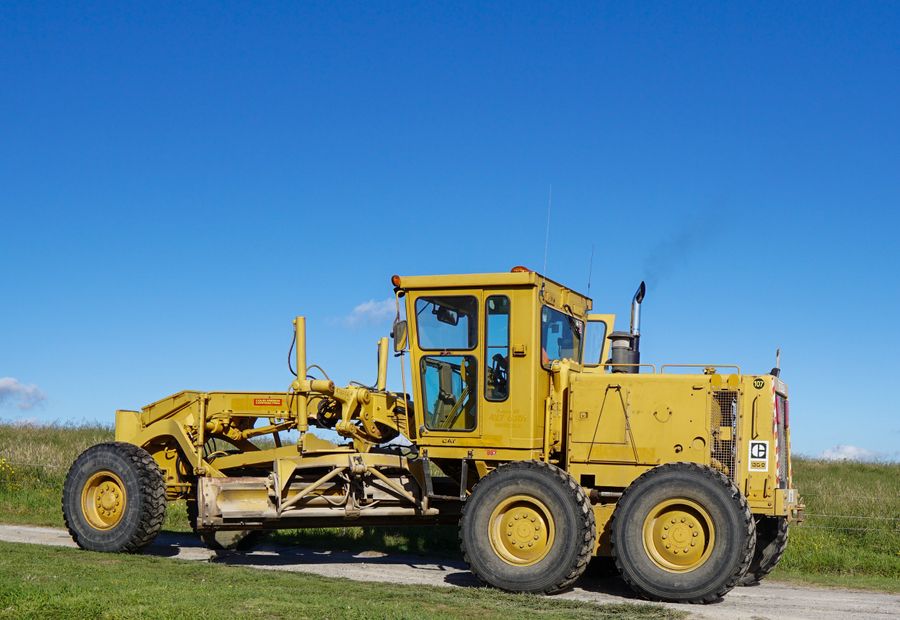
Waterloo Culvert Company grades and rebuilds driveway approaches across Black Hawk County and the counties around it. We also install and replace driveway culverts, repair and clean pipe, build farm and field entrances, set creek crossings, protect outlets, and handle commercial culvert work for rural homes, acreages, and farms in Waterloo, Evansdale, La Porte City, Hudson, and Janesville, Iowa.
Approaches get a compacted base, a crown or a cross fall built into the surface, graded rock sized to the traffic, and erosion control blanket with seed where a new slope needs holding until grass takes it. The alternative is the load of gravel dumped at the road and spread flat. That approach has no shape, so it holds water in the wheel tracks, sheds nothing sideways, and delivers everything it collects straight down onto the culvert.
The Grade From the Road to the Pipe
Three elevations have to agree: the edge of the road, the top of the culvert, and the driveway behind it. Get them wrong and you have a hump that scrapes a bumper or a dip that ponds after every rain. This ground gives us very little fall to play with, so the transitions have to be stretched out rather than stacked up. The culvert elevation is part of that arithmetic, which is why we set grade and pipe together rather than one after the other.
Crown and Cross Fall
Behind the road the driveway needs a shape that sends rain off the side within a few feet. A crown does it on a straight run, a cross fall does it where the ground leans one way already. Without either, the driveway becomes a channel. Water running the length of a gravel drive picks up speed, moves stone, and cuts the ruts that come back a month after every regrade.
Base Before Rock
Rock is the wearing surface. The base under it carries the load. A driveway that needs gravel every year usually has a base problem hiding under it, and adding stone treats the symptom. We cut down to something solid, compact it, and build back up in lifts, then choose rock size for whether the drive sees pickups or loaded trucks.
Sight Lines and Booking
Where a new entrance goes is not entirely your choice. The road authority looks at sight distance and drainage when it reviews an application, and it may want the entrance moved along your frontage. We find out before we grade anything. Regrading runs well from late spring through fall, and a wet ditch or saturated ground moves a start date. Call (319) 555-0122.
Why does my driveway scrape at the road?
The approach has a hump in it, usually where the driveway crests over the culvert before dropping to the pavement. A low car touches down at the change of grade rather than on the slope itself. The fix is to stretch that change over a longer distance so the transition is gradual. Sometimes the culvert sits too high, and then the pipe elevation has to move with the grade.
Why does water run down my driveway instead of off it?
Because the surface has no crown or cross fall, so the driveway is the lowest line available and water uses it. Every foot it travels it picks up speed and takes gravel with it, and it all arrives at the culvert at once. We reshape the surface so water leaves sideways within a few feet, which takes the load off both the driveway and the pipe.
How much rock does a gravel approach need?
Less than people think and more than they usually put down, and it has to sit on something. A compacted base under it does most of the structural work. Rock spread on soft ground disappears into it within a season, and you are buying gravel every year to hide a base problem. We build the base first, then choose the rock size for the traffic.
Can you tie a concrete or asphalt apron into my gravel drive?
Yes. The joint is the part that matters. A hard apron and a loose gravel drive move differently, so the edge of the apron needs support under it and the gravel needs a shaped transition rather than a lip. Done poorly, the gravel walks away from the apron edge and leaves a step that catches a bumper and holds water.