Driveway Culvert Installation in Waterloo, IA
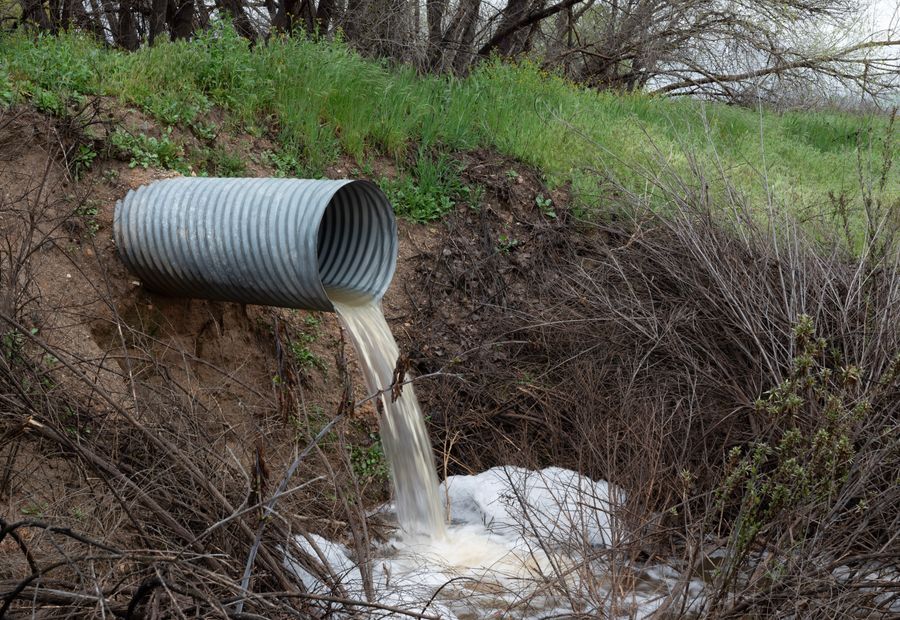
Waterloo Culvert Company is an excavating contractor doing driveway culvert installation, culvert replacement, culvert repair and cleaning, farm and field entrances, approach grading, creek crossings, outlet protection, and commercial culvert work. We build entrances for acreages, farms, country homes, and subdivision lots across Waterloo, Evansdale, Hudson, Jesup, Dunkerton, and Black Hawk County, Iowa.
We install ADS N-12 dual wall HDPE and Contech HEL-COR galvanized pipe, set on a shaped granular bed with non-woven geotextile holding the native soil out of the bedding stone. Structural backfill goes in on both sides in lifts and gets compacted evenly, left and right together. Metal or plastic flared end sections finish each end. Against that, picture a pipe dropped in a straight trench and covered with the dirt that came out of it. It bears on two high spots, it loses fill off both ends, and one side of the backfill packs harder than the other until the pipe goes oval.
Sizing Is the Whole Job
The ditch decides the pipe. We look upstream and count what drains to your entrance: acres above it, how hard they fall, and whether they are row crop, pasture, timber, or roofs and pavement. A short driveway below a big watershed needs more pipe than a long driveway below a small one. Counties commonly set a minimum diameter for a residential entrance, and often a minimum length so the opening is wide enough. Reaching for the largest pipe available is its own mistake. Oversized pipe sits below the ditch bottom, silts in, and grows cattails.
Metal, Plastic, or Concrete
Galvanized corrugated metal is stiff and cheap and rusts at the floor of the pipe first, so it can look sound from the end. Dual wall HDPE does not corrode in any soil and flows well through its smooth bore, and it needs its cover honored because the compacted fill around it is part of its strength. Reinforced concrete carries load on its own and lasts longest. It needs a machine and tight joints.
Grade, Cover, and Ends
The pipe sits on the ditch flow line, pointed the way the ditch already runs, with a slight steady fall through it. Cover is measured from the top of the pipe to the driving surface, and a residential entrance wants about a foot of it compacted. A farm entrance wants more. End sections widen the opening and hold the fill back off the pipe. Angular rock on fabric at the outlet stops the scour hole that otherwise works back under the pipe.
Approach and Booking
The driveway has to climb out of the ditch and meet the road with no hump and no dip, and it needs a crown behind the road so rain leaves it sideways. Work in the right-of-way needs a permit from whoever maintains that road, and we find out which office that is before we quote your entrance. We measure and permit through the winter and dig when the ground and the ditch allow it. (319) 555-0122 reaches a person.
What size culvert do I need for a driveway?
The size comes from the ditch, not from the driveway. What matters is how many acres drain to that point, how steeply they fall, and what covers them. Fifteen and eighteen inch pipe handle most residential entrances around here, and many counties set a minimum diameter and a minimum length. A bigger watershed above you, or a steeper fall onto you, pushes the size up. Your county has a minimum and we confirm it before we quote.
How much does it cost to install a driveway culvert?
A residential entrance generally lands between fifteen hundred and five thousand dollars installed. Diameter and length move it first. After that it is material, whether you get flared ends or poured headwalls, how much rock goes at the outlet, how much of the approach gets rebuilt, and whether an old pipe has to come out and be hauled off. The permit fee is separate and it is small. We price your entrance, not an average one.
Do I need a permit to install a driveway culvert?
On any public road, yes. The permit comes from whoever maintains that road, which means the county on a county road, the city on a city street, and the state on a state highway. It is usually a short form and a modest fee, and the road department often sets the pipe size and minimum length as a condition of approving it. We pull it or walk you through it. We never promise you an approval before that office has seen the site.
Who owns the ditch in front of my house?
The ditch along a public road normally sits inside the road right-of-way, and the road authority controls that strip even where your property line runs out past it. That is exactly why the permit exists. Which authority depends on the road: county, city, township jurisdiction, or state. Where your line actually falls is a question for your deed and the county map, not for a contractor.