Creek and Crossing Culverts in Waterloo, IA
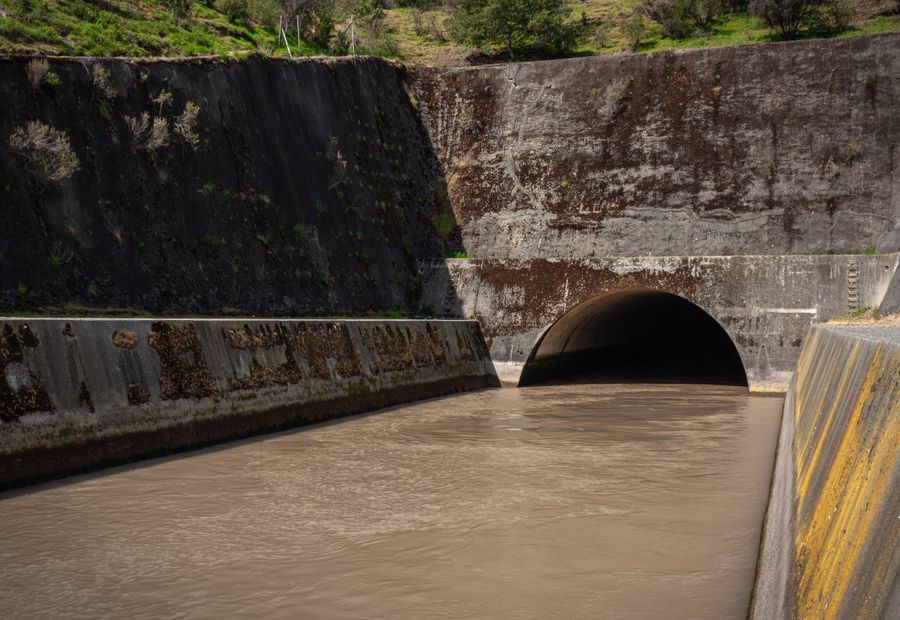
Waterloo Culvert Company builds lane and creek crossings on private ground across Black Hawk County and the counties around it. We also install and replace driveway culverts, repair and clean pipe, build farm and field entrances, grade approaches, armor outlets, and run commercial culvert work for farms, acreages, and rural property in and around Waterloo, Janesville, La Porte City, and Gilbertville, Iowa.
Crossings go in as large diameter Aluminized Type 2 corrugated metal, arch sections, or precast concrete box culvert sections, founded on prepared bedding with poured headwalls and wingwalls where the banks are steep. Angular riprap protects both banks and both ends. Contrast that with a couple of short pipes laid in a draw and covered with the spoil from digging it. That crossing works until the first real rise, when the flow finds the outside of the pipes and takes the fill out around them.
Sizing for a Stream, Not a Ditch
A creek has a channel, and that channel is the stream telling you how much water it carries. We read the bank height, the width of the bed, and the debris line, then size the opening to move what the channel moves. Undersized crossings do not merely flood. They dam the stream, load the fill from the upstream face, and blow out sideways.
One Opening or Several
A single large opening handles debris better and holds a defined channel. Twin pipes are a compromise for shallow cover, and they need the space between them protected. A box culvert spans wide where a round pipe of the same capacity would sit too high for the lane above it. We price the options against the cover you actually have.
Banks, Approaches, and Cattle
Both banks get protection and both approaches need grade, because a crossing that dumps water onto a bare bank simply moves the erosion twenty feet. Where livestock use the crossing, the surface, the wing walls, and the fencing tie-ins all change. Equipment crossings get width and cover sized to the machinery.
Approvals Come First
This is the hard part. Work in a stream carries approvals that a roadside entrance does not, and a lane crossing away from any public road can still touch a regulated waterway or a tile line. Never assume no permit is needed because no road is involved. We find out which offices apply to your crossing and confirm their rules before we quote a number. Call (319) 555-0122.
Is a creek crossing different from a driveway culvert?
Very. A roadside entrance handles ditch flow, which arrives after rain and leaves again. A creek carries water all the time and rises hard, and it moves gravel, branches, and whole trees when it does. That changes the sizing, the end treatment, and the bank work. It also changes who has to approve it, which is the part people do not expect.
Is one big pipe better than two smaller ones?
Usually yes for a live stream. A single opening keeps the flow together, carries debris through instead of catching it, and holds a defined channel. Two pipes side by side pass the same water on paper, but the pier of fill between them collects sticks and silts one side up. Multiple pipes make sense where cover is shallow and a single large diameter will not fit under the lane.
When does a box culvert beat a round pipe?
When you need a wide opening under shallow cover. A precast box spans the channel with a flat top, so it passes far more water than a round pipe of the same height. Wide draws, low lanes, and crossings where raising the road is not an option are where a box earns its cost. It needs a prepared foundation and a machine that can set the sections.
What about a ford or low water crossing instead?
It is a legitimate answer on a lightly used lane over an intermittent draw. A hardened crossing costs less than a structure and it cannot plug, because there is nothing to plug. The trade is access. It is impassable while the water is up, and it still needs approvals, because you are working in the channel either way.