Farm and Field Entrances in Waterloo, IA
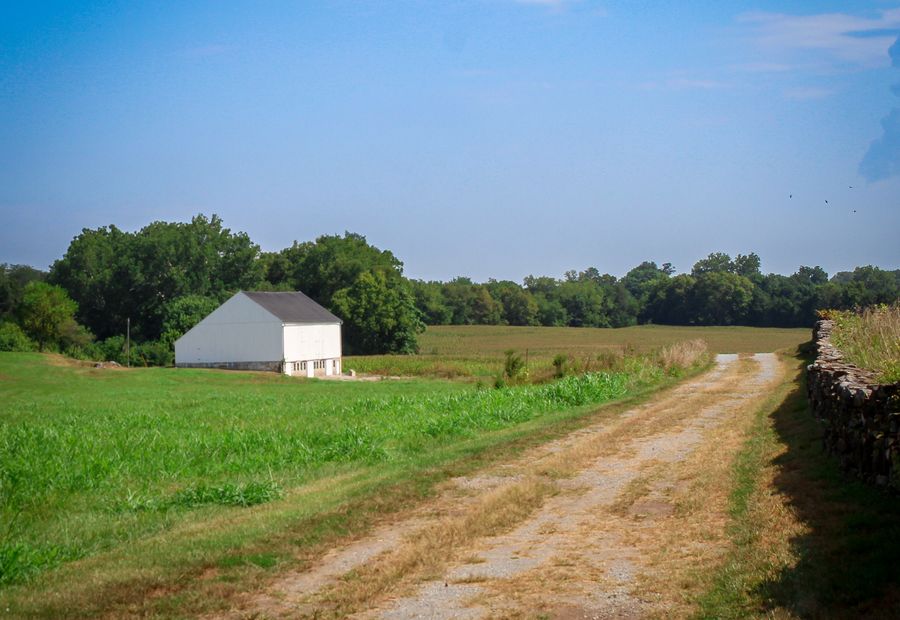
Waterloo Culvert Company builds farm and field entrances across Black Hawk, Bremer, Buchanan, and Tama counties. We also install and replace driveway culverts, repair and clean pipe, grade approaches, set creek and lane crossings, protect outlets from scour, and run commercial culvert work for farms, acreages, and rural homes around Waterloo, Jesup, Dunkerton, and Denver, Iowa.
Field entrances go in with reinforced concrete pipe or Prinsco Goldflo dual wall where the loads allow it, on granular bedding, with cover set for loaded axles rather than for a half ton pickup. Ends get flared sections or poured concrete depending on the ditch depth. The difference between a field entrance and a house entrance is not decoration. A residential pipe carries a car twice a day. A field pipe carries a loaded grain truck twenty times in a week, always in the same wheel track, on ground that is already soft in the fall.
Width Sets the Pipe Length
Equipment decides the opening. A combine with the head on, a grain cart running alongside, and a semi that has to swing off a gravel road all need room to come in square. The pipe then has to run past both shoulders of that opening, so a wider entrance is a longer pipe, and length moves the price as fast as diameter does. We measure what actually uses the field.
Cover, Not Just Pipe
Cover is the material between the top of the pipe and the surface a wheel rolls on, and it is what spreads a load out before the pipe feels it. Farm entrances get more of it than residential ones. Short cover is why field pipes go flat in the wheel tracks while the rest of the barrel stays round.
Tile, Gates, and Sight Lines
Tile outlets into the ditch are a fact of life on this ground, and they sit where they sit. We locate them before we dig. Gates get set back off the road so a rig can pull clear of the pavement before it stops, which is a safety item and a courtesy to whoever comes over the hill next. Where a field has more than one entrance, the county has a view on how many and where, and that is part of the permit conversation.
Working Around Your Season
Field work waits for the window. Not planting, not harvest. We book the summer months first for exactly that reason, and dry ditches make the work better anyway. Call (319) 555-0122 and tell us what runs across the entrance.
How wide should a field entrance be?
Wide enough for the longest machine that uses it to turn in without dropping a wheel off the edge. A combine head, a grain cart, and a semi with a hopper bottom all need more swing than a pickup does. Width drives pipe length directly, because the pipe has to reach past both shoulders of the finished opening. We measure the equipment, not the gate that is there now.
Do I need a heavier pipe for a farm entrance?
Usually heavier cover first, and often heavier pipe as well. Cover is what carries the wheel load, so a loaded grain truck needs more compacted material over the barrel than a car does. Reinforced concrete pipe earns its money under an entrance that takes loaded axles all fall, because it carries load on its own instead of leaning on the fill around it.
Will you work around my tile lines?
Yes, and we ask about them before the bucket moves. Tile outletting into a roadside ditch is normal here, and the outlet often sits within a few feet of where a culvert goes. Cutting one is expensive and it is avoidable. Mark what you know, and we probe for the rest. Crossing a tile line under a county road is its own separate permit track from the entrance permit.
When can you do field entrance work?
Between planting and harvest, and we plan it that way. No farmer wants a machine parked across the only access in April or October. Summer is the sweet spot anyway, because the ditch is low and the trench stays dry. We keep at least one access open where a field has more than one entrance, and we tell you if a job will close the only one for a day.