Outlet and Erosion Protection in Waterloo, IA
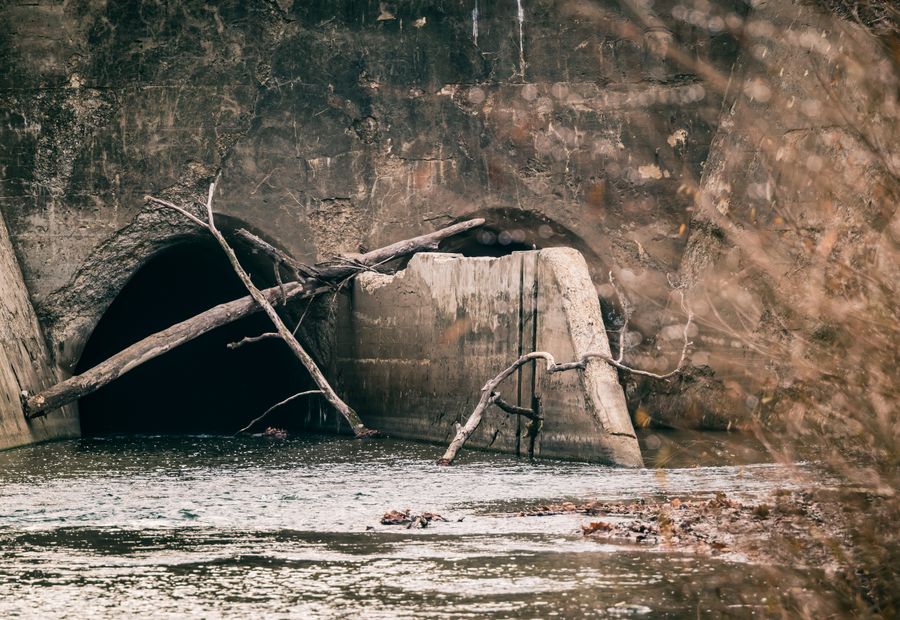
Waterloo Culvert Company armors culvert outlets and repairs ditch erosion across Black Hawk, Bremer, Buchanan, and Tama counties. We also install and replace driveway culverts, clean and repair pipe, build farm and field entrances, grade approaches, and set creek crossings for country homes, farms, and acreages around Waterloo, Denver, Dunkerton, and Evansdale, Iowa.
Outlets get angular riprap sized to the flow, laid on non-woven geotextile fabric, with rock rundowns where water drops off a bank. New ditch slopes get seed and erosion control blanket pinned down until grass has hold of them. The usual alternative is a few round field stones tipped at the pipe end. Those roll out of position in the first fast flow, and the water carries on cutting the hole it had already started.
Energy Has to Go Somewhere
Water inside a pipe is confined and moving. The moment it exits, all of that speed is still there and the channel is not. Riprap works by spreading that flow across a rough surface so it slows down before it reaches soil. That is the entire principle. It is not decoration, it is not landscaping, and it usually costs a few hundred dollars against a pipe that costs thousands.
The Inlet Undercuts Too
Owners watch the outlet because the damage is obvious there. The inlet fails differently. Water swirling at an unprotected inlet works down beside the pipe and starts a path along the outside of the barrel. Once water travels alongside a culvert instead of through it, the fill goes with it and a void opens over the pipe. Inlet armor and a proper end section stop that.
Shaping the Ditch Above and Below
A culvert is one point on a ditch and it cannot fix the rest of it. If the channel above the pipe is choked or the channel below it has silted flat, water backs up and finds another route. We reshape the ditch run on both sides of the entrance so the flow arrives clean and leaves clean, then stabilize the new slopes before the next rain tests them.
Sediment Off a Bare Approach
Fresh dirt at an entrance travels. Silt washing off a new approach lands in the pipe you just paid for, and it also lands in your neighbour's ditch. Seed, blanket, and a shaped edge hold it in place through the first season. We quote year round and build once the ditch is low enough to work in. Call (319) 555-0122.
Why is there a hole at the end of my culvert?
Water leaves a pipe faster than it travels in an open ditch, and the first thing it hits is whatever sits at the outlet. Bare soil cannot take that, so it digs. The hole deepens, then works backward toward the pipe, and eventually the end of the barrel is hanging with nothing supporting it. That is the point where a cheap rock job becomes an expensive rebuild.
What size rock goes at a culvert outlet?
Sized to the flow, and angular rather than round. Rounded river stone rolls away under fast water. Angular rock keys into itself and stays put. Bigger pipes and steeper falls need heavier stone, and the layer has to be thick enough that water cannot find its way between the pieces to the soil underneath. Fabric goes down first, every time.
Do I really need fabric under the riprap?
Yes, and it is the cheapest part of the job. Without it, water works through the gaps in the rock and pulls fine soil out from underneath. The stone then settles into the ground it was protecting, and within a couple of seasons you have rock sitting in a hole doing nothing. Non-woven geotextile keeps the two layers separate so the armor stays where it was placed.
My driveway shoulder is slumping into the ditch. Can that be fixed?
It can, and the cause is almost always water finding the edge of the fill. We cut back to firm material, rebuild in compacted lifts, then protect the face so the same flow cannot restart it. Where the slump started at an unprotected pipe end, the end treatment goes in at the same time. Rebuilding the shoulder without that is a repair with a short life.